

Bunbury Outer Ring Road

The Bunbury Outer Ring Road (BORR) is a $1.25 billion project creating a four-lane road linking Forrest Highway and Bussell Highway in the South West region of Western Australia (WA).
Project Procurement Targets
The South West Gateway Alliance (SWGA) was awarded the contract in 2020, including the following social procurement targets.
$450 million local businesses spend
$30 million Aboriginal businesses spend
10% of the project’s construction workforce to be Aboriginal
10% of the project’s construction workforce to be previously unemployed people
-
To address the identified risks and ensure the economic benefits and social outcomes were realised for the South West, SWGA established the BORR Local Business Advisory Group (LBAG). Made up of representatives from both the South West business community and civil contractors’ sector, the LBAG has proven effective in creating local solutions.
-
Under the WA Buy Local Policy, businesses owned and operated from outside the region but with a local office, could still claim the local preferencing (e.g. in Perth). SWGA, in collaboration with LBAG, established an ‘inside-out’ policy that prioritised genuine Bunbury-based businesses, and established the Local Weighting table. The table defined five different ‘categories’ of local, with the highest preferencing for businesses owned, operated and established in the region. This drove the procurement evaluation framework, providing tangible advantages to genuinely local businesses.
-
SWGA maintain a register of businesses who express interest in working on the BORR project. The register enables businesses to nominate their service offerings, which SWGA procurement can then utilise for tender invitations and minor procurement.
-
Main Roads funded a local content advisor (LCA) to work in the SWGA. The LCA, seconded from the Department of Primary Industries and Regional Development (DPIRD), develops relationships with local and Aboriginal businesses, works collaboratively within SWGA, in procurement strategy and identify upcoming opportunities.
-
Business briefings: 9 package-specific business briefings seeking feedback on scope before packages are finalised. 48 businesses provided feedback on proposed packages which was used to finalise scope.
Feedback: SWGA have met with 77 local and Aboriginal business to understand the reasons for declining tenders. The reasons are collated and reported on through the LBAG and SWGA board.
Industry focus groups: These two sessions with local businesses were to provide direct and honest feedback to decision makers within the SWGA senior management team in an open forum.
-
To maximise employment of both local Aboriginal and unemployed people, SWGA established the Yaka Dandjoo program as a training and employment pathway into civil construction. In collaboration with Federal and State Government agencies, SWGA facilitated the program along with a local Group Training Organisation (GTO).


Overcoming Challenges
SWGA identified various challenges in realising these ambitious targets, including:
The lack of sufficiently large-scale capital works capacity in the South West region
Labour constraints and the lack of established Aboriginal businesses and Aboriginal workforce in the South West
To address these challenges and ensure economic benefits and social outcomes for the South West, six key workstreams were established.

During planning phase, Main Roads engaged KPMG to assess the indirect impact the project would have on the community during construction. The estimates were significant.
For example, KPMG estimated that for every $50 Million output on construction services, the project would generate 735 jobs; and for every $1 procured on local businesses, an additional $1.50 would be circulated back into the local economy.
This led to the inside-out strategy, which has resulted in $377M on ‘category 1’ locally owned and operated businesses (i.e. 73% of the $517M). The indirect benefits generated from the construction phase to date would include over 5000 jobs and $565 Million of indirect spend in the local community.
Initiative benefits
-

Local businesses
Benefitted through direct spend
305 local businesses (with 108 awarded contracts over $50,000)
38 Aboriginal businesses benefitted (with 21 awarded contracts over $50,000)
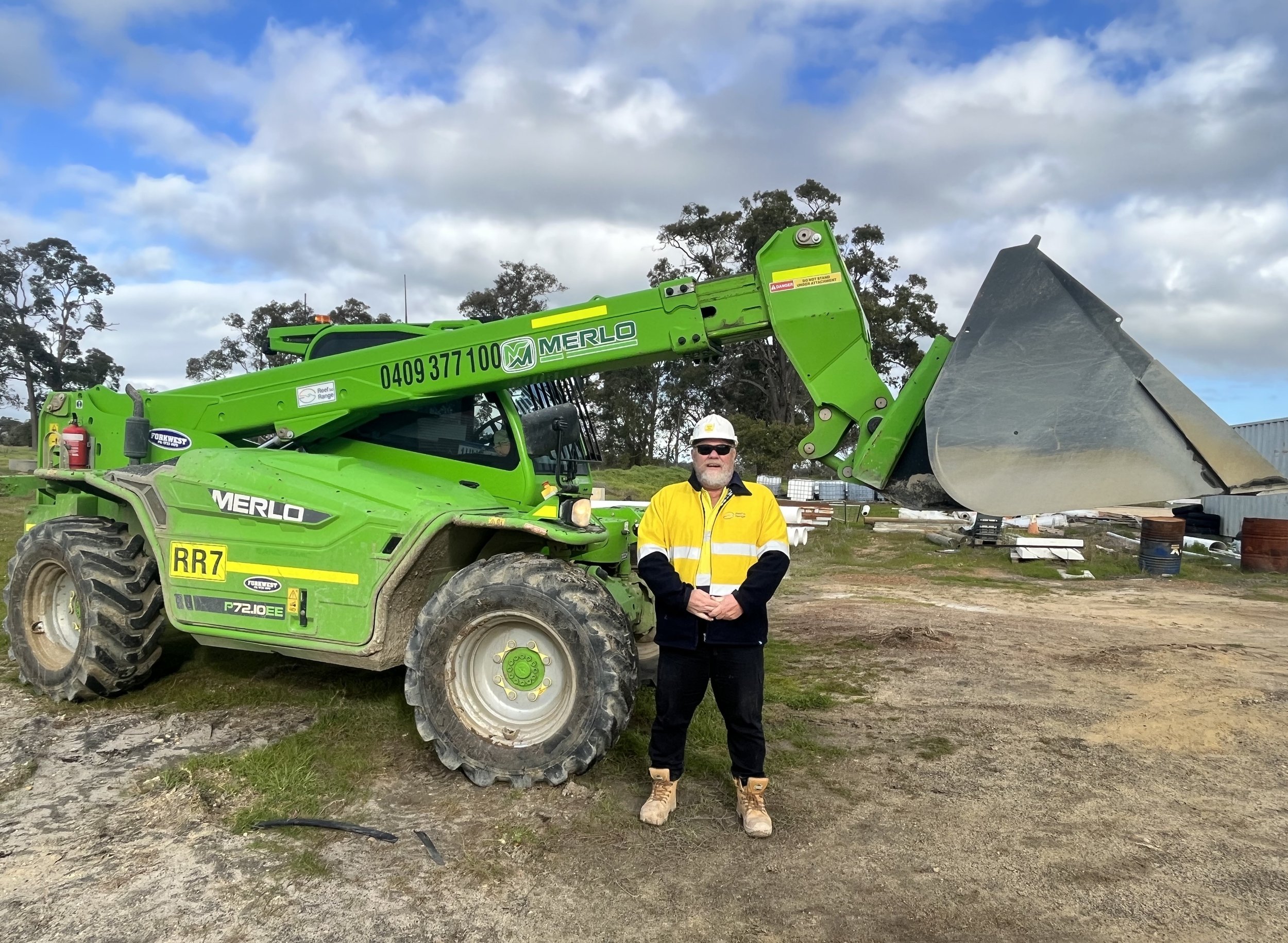
For business owners such as Brett Doust, the BORR presented a unique opportunity for a long-term plant hire contract in his own town. Brett took the opportunity to purchase his own machine and start his own business, and he has now been contracted to the project for over 12 months.
Doust Grader Services is one of eight owner-operators with long-term plant hire contracts who took the opportunity to work on the BORR project rather than continue the FIFO lifestyle usually required for sustained employment in the industry.
-

Local employment
The Yaka Dandjoo program alone generated employment for:
62 graduates (majority previously unemployed with no previous experience in the civil industry)
With 35% of graduates now in apprenticeships or traineeships
21% have held steady employment for over 12 months since graduating
SWGA’s aboriginal participation strategy has led to 97 Aboriginal people employed on the project; either directly with SWGA or employed via one of SWGA’s subcontractors.
-

Legacy and UN SDG contribution
For many local businesses, engagement with SWGA for the BORR project has been a significant first step towards setting and achieving higher standards in business practices.
One-on-one support and upskilling opportunities have ensured local businesses have developed their capacity to set stretch targets for themselves and capitalise on the opportunity to upgrade their administrative and procurement practices, purchase new and more efficient equipment, hire new staff, upskill existing staff, diversified services delivery scope and capability.
In addition, the upskilling of local employees has strengthened local employment capacity for contracted or in-house maintenance with Main Roads WA. This is particularly important given Main Roads WA policy direction to bring road maintenance in house.
The BORR project has provided opportunities for hundreds of local labourers, operators, engineers and other skilled positions and exposed them to the highest standard of safety and construction practices.
Initiative outcomes:
-
Earthworks and drainage packages were significantly reduced in size to ensure accessibility for local businesses. This resulted in a significant increase in local participation in these packages.
-
SWGA responded to local industry preference for long-term plant hire contracts rather than contract work, issuing plant hire contracts to 20 individual businesses, of which 90% are local and 76% are small businesses.
-
SWGA exceeded the committed local and Aboriginal spend targets through its current contract commitments, with $517M of local business spend and $34M on Aboriginal businesses.
-
83% of contracts were won locally when a local business participated in the tender process.
-
SWGA’s Yaka Dandjoo program has been successful, with 140 individuals graduating from the program, 57% of whom are female and 60% Aboriginal.
-
Embedding an LCA into the Alliance has provided valuable insights for future projects, informing local content goals and strategies.
-
Established as a shopfront in Bunbury’s main street, the hub provides information and opportunities for the local community.
This content is derived from an Infrastructure Sustainability Council Gala Awards Submission. For more details, please visit the ISC Case Studies.